
How Air Purifiers Work: Your Defense Against Every Hidden Threat
Introduction
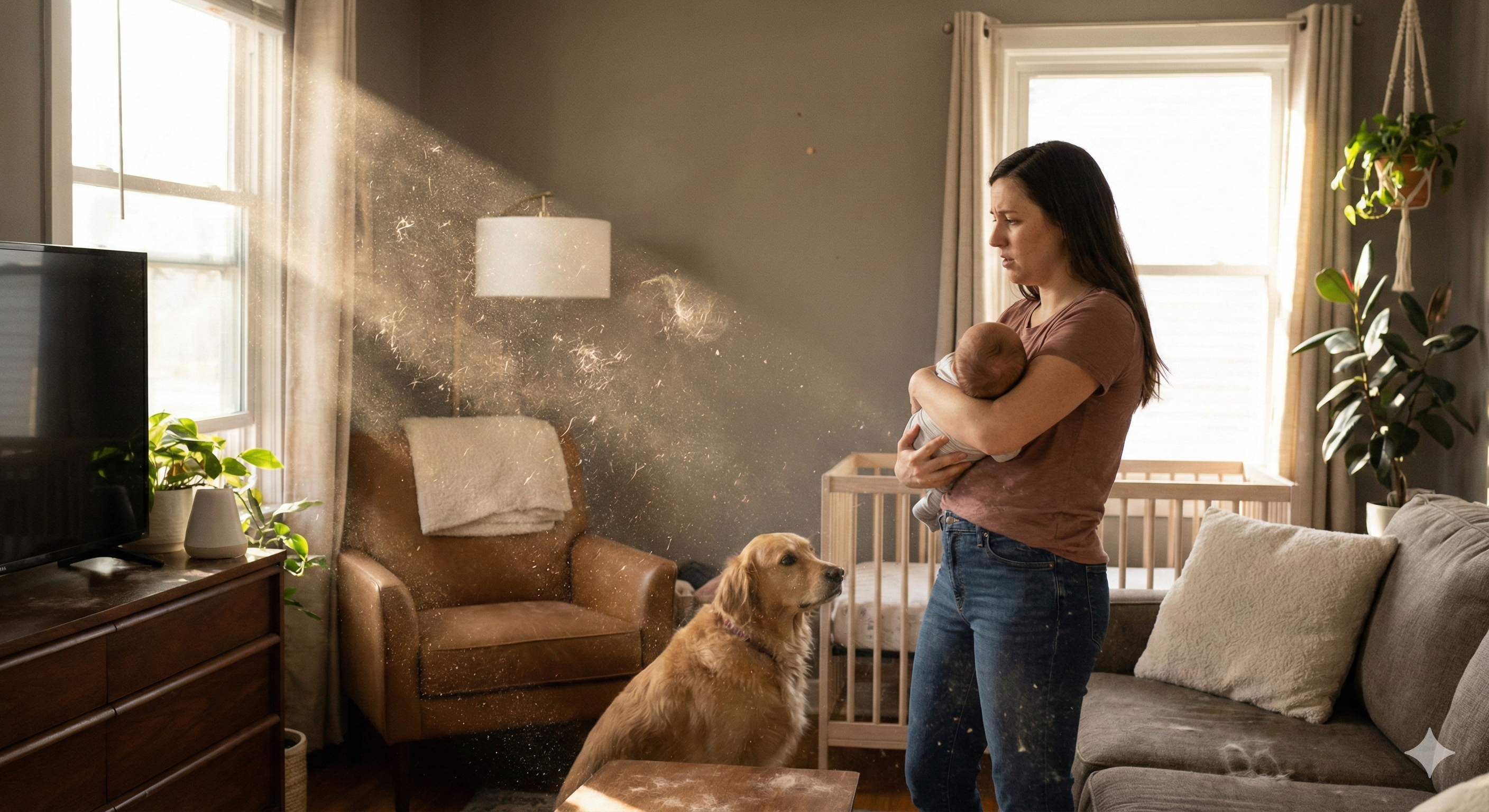
You can not see them, but they're everywhere. Right now, millions of microscopic particles are floating through your home—pet dander from your beloved dog, pollen hitchhiking in from outside, dust mites, volatile organic compounds from that new furniture, even bacteria and viruses. If you've ever wondered why your allergies flare up indoors or why that pet smell lingers no matter how much you clean, you're experiencing the reality of indoor air pollution.
The EPA estimates that indoor air can be 2-5 times more polluted than outdoor air. But here's the empowering truth: understanding how air purifiers work gives you the power to transform your home's air quality. In this comprehensive guide, you'll discover the science behind air purification, learn which technologies actually work, and find out if an air purifier is the solution your family needs—whether you're battling pet allergies, protecting a newborn's delicate lungs, or simply seeking cleaner, fresher air.
The Science Behind Air Purification: How These Machines Actually Work
At its core, an air purifier is a sophisticated filtration system designed to capture and neutralize airborne contaminants. Think of it as a specialized vacuum for your air—continuously drawing in polluted air, trapping harmful particles, and releasing cleaner air back into your room.
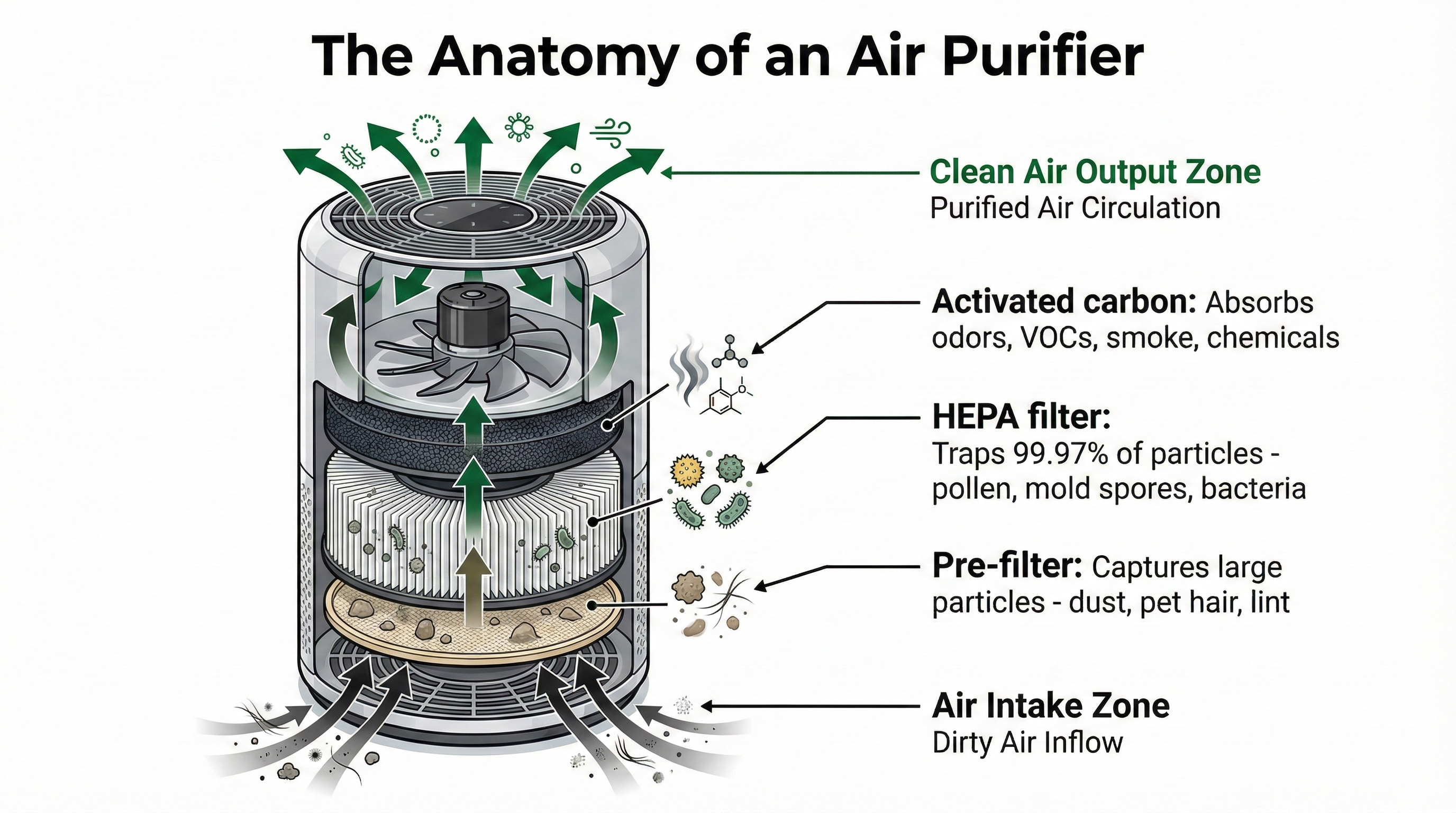 The process follows three essential steps:
Air Intake: A powerful fan pulls contaminated air into the unit from your room. Strategic intake vents maximize the volume of air processed, with quality purifiers cycling the entire room's air 4-5 times per hour.
Filtration: As air passes through multiple filter layers, each targets specific contaminants. This is where the magic happens—different filter technologies tackle different threats, from large pet hair to microscopic viruses.
Clean Air Release: Purified air is pushed back into your space, often through directional vents that optimize circulation and prevent dead zones where pollutants can accumulate.
The efficiency of this process depends entirely on the filtration technology inside. Not all air purifiers are created equal, which is why understanding filter types is crucial.
HEPA Filters: The Gold Standard for Air Purification
When researching air purifiers, you'll encounter HEPA filters constantly—and for good reason. HEPA (High-Efficiency Particulate Air) represents the gold standard in mechanical filtration.
What Makes HEPA Filters So Effective?
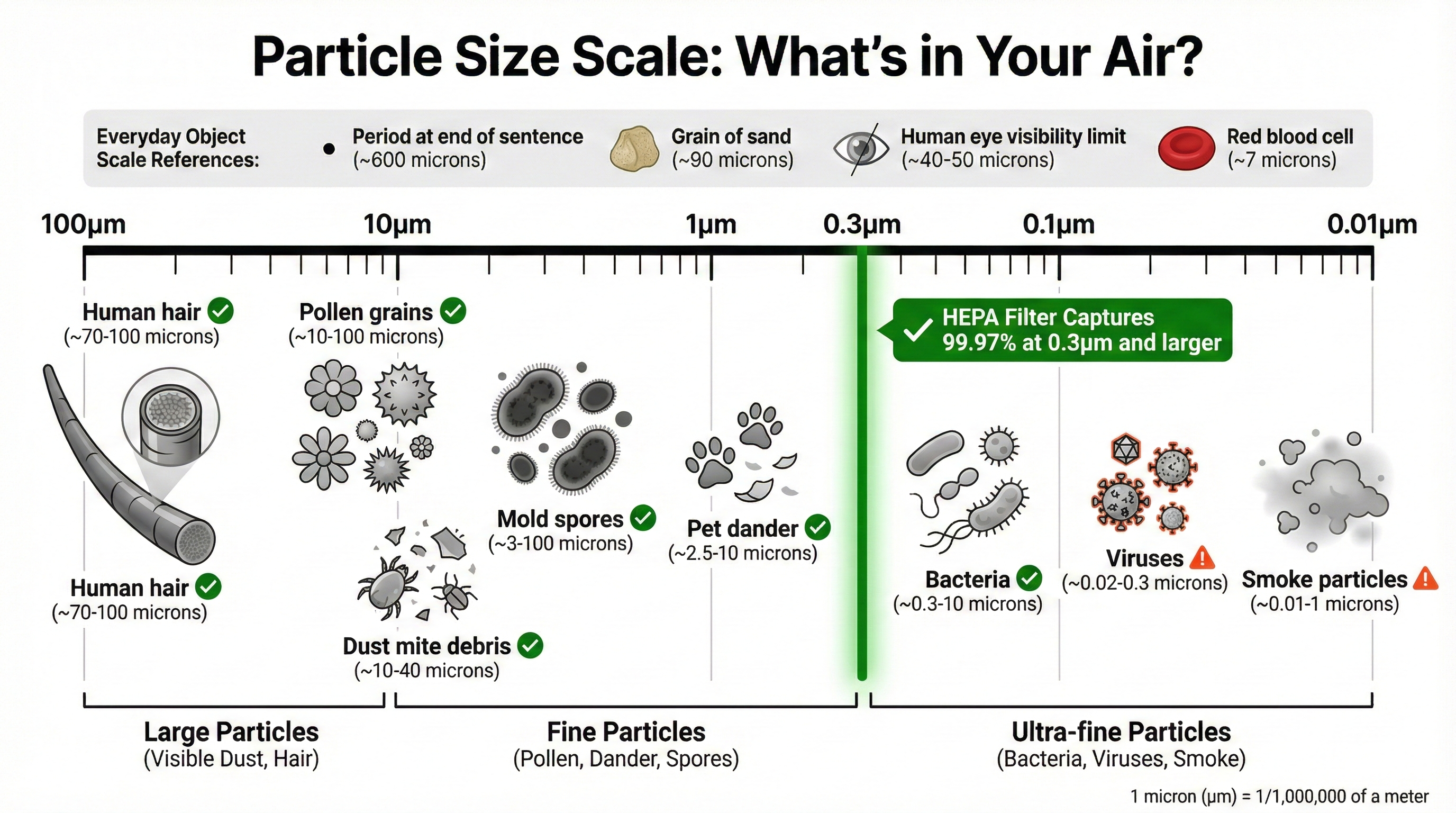
An air purifier with HEPA filter uses a dense mat of randomly arranged fibers to trap particles. True HEPA filters must capture 99.97% of particles as small as 0.3 microns. To put that in perspective, a human hair is about 70 microns wide—HEPA filters catch particles over 200 times smaller.
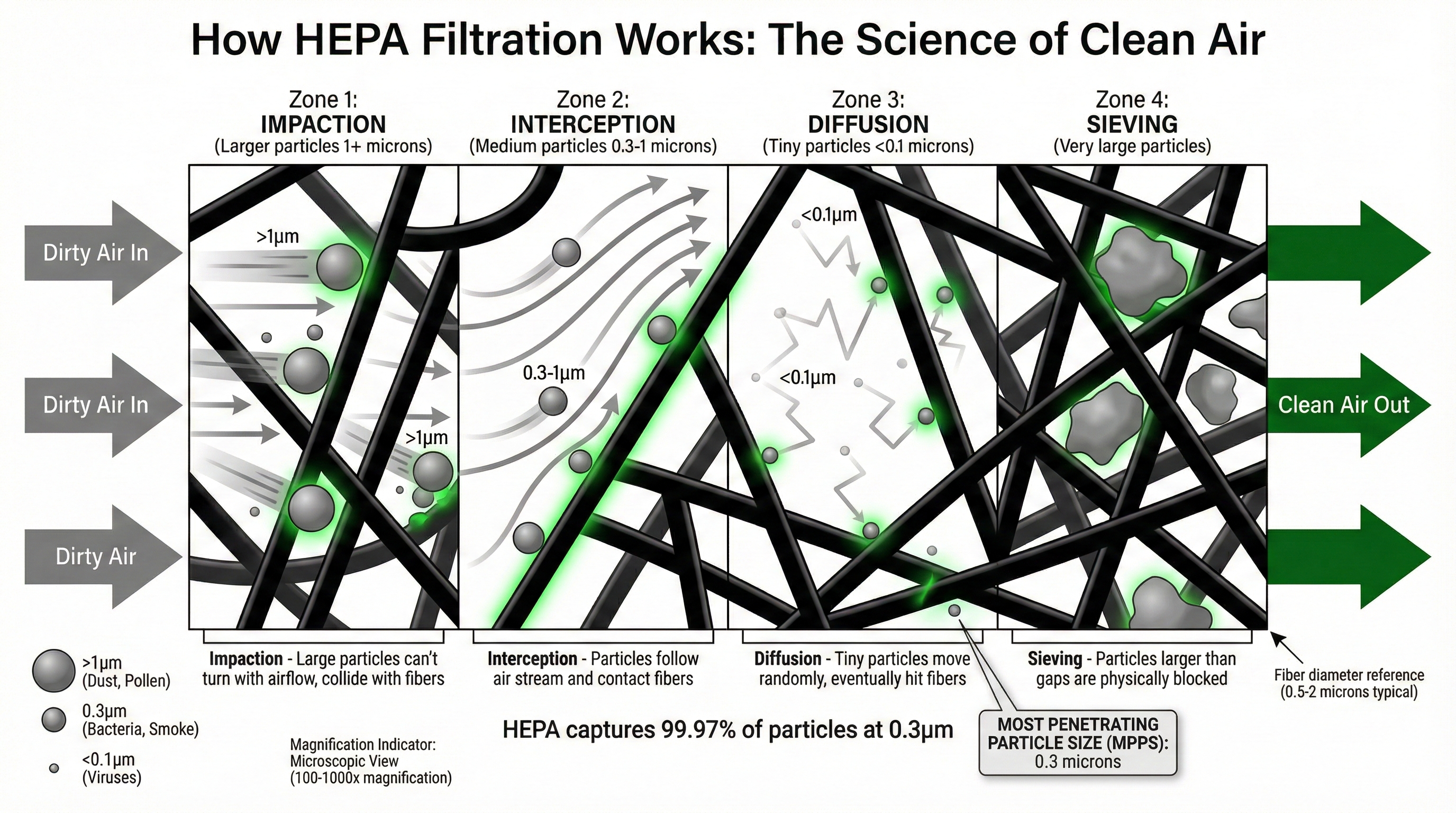
The filtration occurs through four mechanisms:
- Interception: Particles following airflow come within one radius of a fiber and stick to it
- Impaction: Larger particles can't follow air's curved path around fibers and collide directly
- Diffusion: The smallest particles move erratically and eventually hit a fiber
- Sieving: Particles larger than gaps between fibers are physically blocked
This multi-mechanism approach is why HEPA technology excels at capturing everything from pollen (10-100 microns) to pet dander (5-10 microns) to bacteria (0.3-10 microns).
What HEPA Filters Actually Capture
For pet owners, a HEPA filter is non-negotiable. Air purifiers for homes with pets need to handle the constant barrage of dander, fur, and dried saliva particles that trigger allergic reactions. HEPA filters trap these protein-laden particles before they can circulate through your home or settle on surfaces.
For allergy sufferers, HEPA filtration captures the full spectrum of seasonal allergens—pollen, mold spores, and dust mite debris. Studies show that using an air purifier for home environments can reduce airborne allergen concentrations by up to 50% within just a few hours of operation.
Beyond HEPA: Multi-Stage Filtration Systems
While HEPA filters handle particulate matter brilliantly, comprehensive air purification requires a multi-layered approach. The most effective air purifiers combine several technologies to address every type of indoor air pollutant.
Pre-Filters: The First Line of Defense
Before air reaches the expensive HEPA filter, a pre-filter captures large particles like hair, dust, and lint. This extends the HEPA filter's lifespan significantly—a crucial consideration since replacement HEPA filters can cost $50-150 each.
For those wondering "can air purifiers remove dust," the answer starts here. Pre-filters excel at capturing visible dust particles, while HEPA filters catch the microscopic dust that escapes regular cleaning.
Activated Carbon Filters: Odor and Chemical Elimination
HEPA filters have one weakness: they don't capture gases, odors, or volatile organic compounds (VOCs). This is where activated carbon steps in.
Activated carbon is treated to create millions of tiny pores, creating an enormous surface area—a single gram can have a surface area of 3,000 square meters. These pores trap odor molecules and chemical vapors through adsorption.
This technology is essential for pet owners dealing with litter box odors or that "wet dog" smell, for new parents concerned about VOCs from nursery furniture and paint, and for anyone sensitive to cooking odors or household chemicals.
UV-C Light and Ionization: Advanced Technologies
Some premium air purifiers incorporate UV-C light to neutralize microorganisms. The ultraviolet radiation damages the DNA of bacteria, viruses, and mold spores, preventing them from reproducing. However, this technology works best as a supplement to HEPA filtration, not a replacement.
Ionization releases charged particles that cause airborne contaminants to clump together and fall out of the air or stick to surfaces. While effective, some ionizers produce ozone as a byproduct—something to avoid, especially in homes with children or pets.
Room Coverage and Air Changes Per Hour: Sizing Matters
Even the best filtration technology fails if your air purifier is undersized for your space. This is where CADR (Clean Air Delivery Rate) and room coverage specifications become critical.
Understanding CADR Ratings
CADR measures how quickly a purifier removes smoke, dust, and pollen from the air, expressed in cubic feet per minute. Higher numbers indicate faster, more efficient purification.
To calculate the right size, use this formula: Room square footage × ceiling height = cubic feet. Then choose a purifier with a CADR rating of at least two-thirds this number.
Air Changes Per Hour (ACH)
ACH indicates how many times per hour the purifier completely filters your room's air. For effective allergen reduction, aim for 4-5 air changes per hour. For someone with severe allergies or asthma, 6+ ACH provides optimal protection.
A common mistake is placing one air purifier in your home and expecting whole-house coverage. Air purifiers work best in enclosed spaces where they can efficiently cycle the air. For comprehensive protection, you'll likely need multiple units or a whole-home system integrated with your HVAC.
Real-World Performance: What Air Purifiers Can and Can't Do
Let's address the practical question on everyone's mind: are air purifiers worth it?
Proven Benefits
Research consistently demonstrates that quality air purifiers deliver measurable improvements:
A 2018 study in the American Journal of Respiratory and Critical Care Medicine found that air purifiers reduced fine particulate matter in homes by an average of 55%, with corresponding improvements in cardiovascular health markers.
For allergy sufferers, a study published in the Journal of Allergy and Clinical Immunology showed that bedroom air purifiers reduced airborne allergen concentrations by 75% and improved sleep quality scores by 30%.
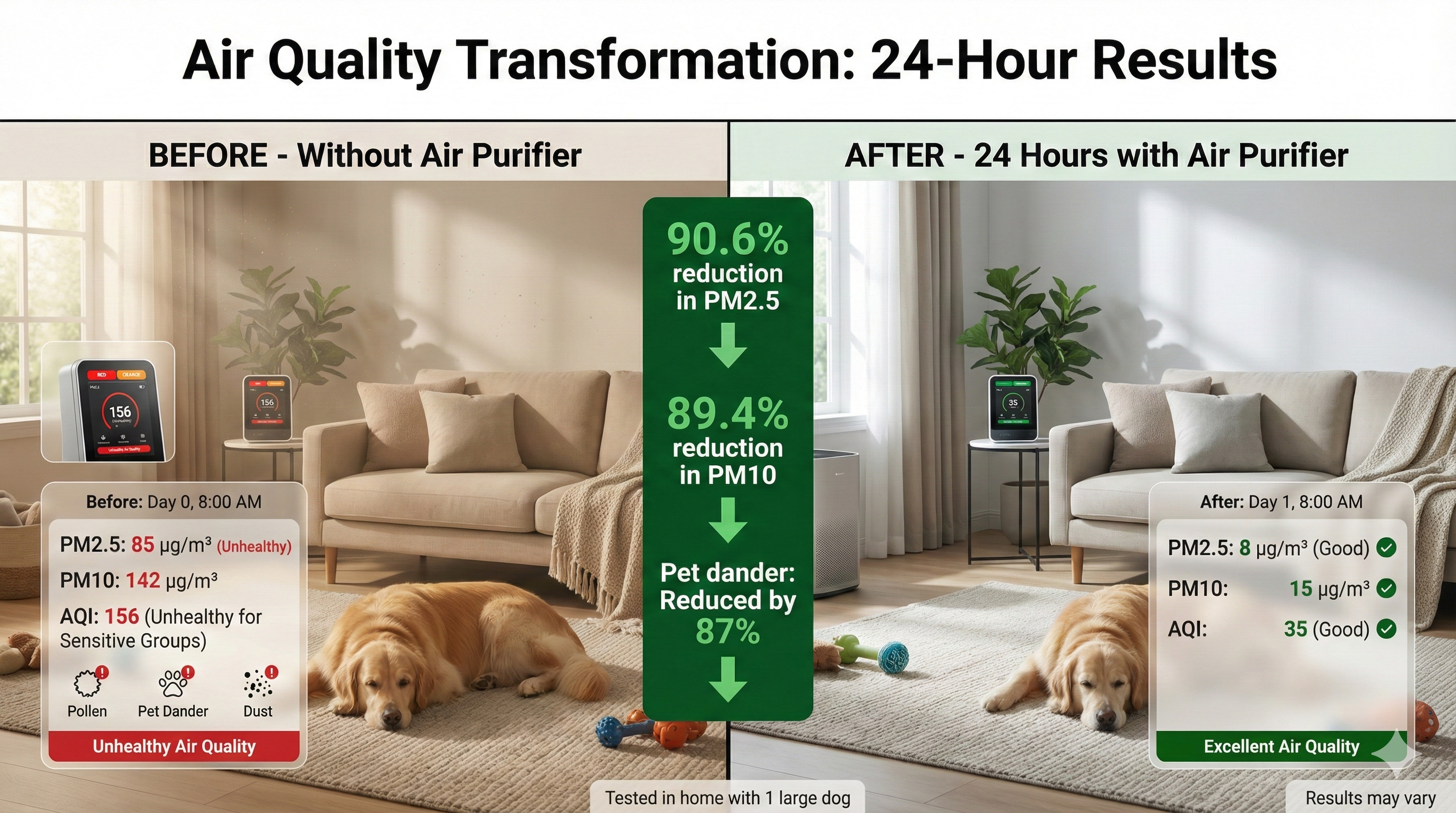
Pet owners see dramatic reductions in airborne dander within 24-48 hours of running a properly sized HEPA purifier. While this doesn't eliminate all allergic reactions—dander settled on surfaces remains problematic—it significantly reduces exposure.
Limitations to Understand
Air purifiers aren't miracle devices. They cannot eliminate pollutants already settled on furniture, carpets, or bedding. Regular cleaning remains essential. They don't solve humidity-related mold problems—you need a dehumidifier for that. They won't remove all odors instantly, especially those embedded in porous materials.
For maximum effectiveness, air purifiers work best as part of a comprehensive air quality strategy that includes source control, proper ventilation, regular cleaning, and appropriate humidity levels.
Choosing the Right Air Purifier for Your Specific Needs
Your ideal air purifier depends on your unique circumstances and primary concerns.
For Pet Owners
Prioritize models with true HEPA filtration, robust activated carbon filters (ideally 3+ pounds), and higher CADR ratings to handle constant particle generation. Look for pre-filters you can vacuum or wash to extend the life of expensive HEPA filters.
For Allergy and Asthma Sufferers
Seek units with certified asthma & allergy friendly™ certification, multiple air changes per hour (6+), and sealed filtration systems that prevent air bypass. Consider placing purifiers in bedrooms where you spend 7-9 hours breathing the same air.
For Nurseries and Children's Rooms
Choose models with ultra-quiet operation (under 30 decibels on low), no ozone emission, night lights or air quality indicators, and childproof controls. Safety certifications matter—look for ETL or UL listings.
For Whole-Home Coverage
Consider your options carefully. Multiple portable units offer flexibility, allowing you to move protection where needed. Whole-home systems integrated with HVAC provide seamless operation but require professional installation and may have higher upfront costs.
Conclusion
Understanding how air purifiers work empowers you to make informed decisions about your home's air quality. From the mechanical precision of HEPA filters capturing 99.97% of microscopic particles to the chemical adsorption of activated carbon eliminating odors and VOCs, modern air purification technology offers genuine, science-backed protection against invisible threats.
Key Takeaways:
- HEPA filtration is the gold standard, capturing particles as small as 0.3 microns including allergens, pet dander, and bacteria
- Multi-stage filtration systems address the full spectrum of indoor air pollutants—particles, gases, and odors
- Proper sizing is critical—match CADR ratings and ACH to your specific room dimensions for effective purification
- Air purifiers work best as part of a comprehensive strategy including source control, ventilation, and regular cleaning
- Long-term costs including filter replacement and energy consumption should factor into your purchasing decision
For pet owners battling dander, parents protecting nursery air, or allergy sufferers seeking relief, quality air purification isn't just worth it—it's transformative. The invisible threats floating through your home right now don't stand a chance against properly selected, well-maintained air purification technology.
Ready to breathe easier? Our upcoming air purifier launch combines cutting-edge HEPA filtration, advanced multi-stage technology, and stylish design that complements any home. Join our VIP Waitlist today for exclusive early access, launch pricing, and expert guidance in selecting the perfect model for your unique needs. Your journey to cleaner, healthier air starts now.
Frequently Asked Questions
How long does it take for an air purifier to clean a room?
This depends on your purifier's CADR rating and room size. A properly sized air purifier should complete one full air change in 12-15 minutes, meaning you'll notice air quality improvements within 30-60 minutes. For maximum allergen reduction, most units need 2-4 hours of continuous operation. For best results, run your purifier 24/7 on a lower setting rather than intermittently on high.
Do air purifiers help with pet odors and dander?
Yes, but only models with both HEPA and activated carbon filtration. HEPA filters capture pet dander and dried saliva particles that trigger allergies, while activated carbon absorbs odor molecules. Air purifiers for homes with pets typically reduce airborne dander by 50-75% within 24 hours, though you'll still need to vacuum and clean surfaces regularly for comprehensive pet allergen management.
Can air purifiers remove dust completely?
Air purifiers significantly reduce airborne dust but cannot eliminate it completely. A quality HEPA purifier can remove 90-95% of airborne dust particles, but dust also settles on surfaces. For best results, combine air purification with regular dusting and vacuuming. If you're asking "can air purifier remove dust" because you dust frequently but still see accumulation, an air purifier will dramatically reduce how often you need to clean.
Are air purifiers worth the investment for allergies?
For allergy sufferers, air purifiers with true HEPA filtration are one of the most effective interventions available. Clinical studies show 40-55% reduction in allergy symptoms when using bedroom air purifiers consistently. The investment typically pays for itself through reduced medication costs, better sleep quality, and fewer lost productivity days. Choose a model with 5+ air changes per hour for allergy relief.
What's the difference between true HEPA and HEPA-type filters?
True HEPA filters are certified to capture 99.97% of particles at 0.3 microns, meeting strict standards. "HEPA-type," "HEPA-like," or "HEPA-style" filters are marketing terms for filters that don't meet this standard—they might capture only 85-90% of particles. For effective allergen and pollutant removal, always choose true HEPA filtration. The difference in performance is substantial, especially for those with severe allergies or asthma.